
Building Management Systems
Centralized Intelligence for Smarter, Safer, and More Efficient Buildings
A Building Management System (BMS) is the backbone of modern smart infrastructure—an integrated platform that connects, monitors, and controls a building’s core systems from a single interface. Designed to enhance operational efficiency, reduce energy consumption, and improve occupant comfort, BMS transforms conventional buildings into intelligent, responsive environments.
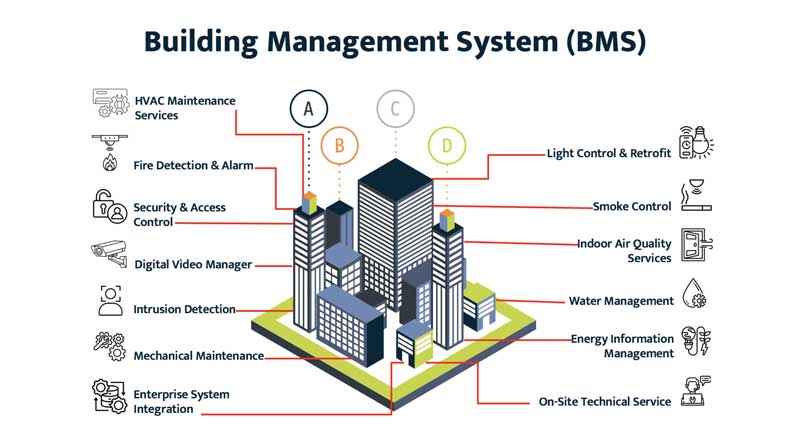
What is a BMS?
A Building Management System is a centralized control system that integrates key building services such as HVAC (heating, ventilation, and air conditioning), lighting, power systems, fire safety, and security. By leveraging sensors, controllers, and advanced software, BMS enables real-time monitoring, automation, and optimization of all building operations.
Key Features & Capabilities
BMS provides a unified dashboard where facility managers can oversee all building systems in real time. From adjusting temperature settings to monitoring energy usage and equipment performance, everything is accessible through a single, user-friendly interface.
One of the primary benefits of a BMS is its ability to optimize energy consumption. By automating lighting, HVAC, and power systems based on occupancy and usage patterns, it significantly reduces energy wastage and operational costs while supporting sustainability goals.
BMS uses pre-defined logic and real-time data to automate routine operations. For example, lighting and air conditioning can automatically adjust based on occupancy, time schedules, or external weather conditions—ensuring optimal performance without manual intervention.
Integrated safety systems within BMS include fire alarms, smoke detection, CCTV surveillance, and access control. In case of emergencies, the system can trigger immediate responses such as alarms, emergency lighting, and controlled evacuations, ensuring maximum safety.
Advanced BMS solutions can identify system inefficiencies, detect faults, and generate alerts for preventive maintenance. This minimizes downtime, extends equipment life, and reduces unexpected repair costs.
Benefits of Implementing BMS
A well-designed BMS not only streamlines operations but also adds long-term value to your property. It enhances occupant comfort by maintaining optimal indoor conditions, improves asset performance, and provides actionable insights through data analytics and reporting.
Additionally, BMS plays a critical role in achieving green building certifications and compliance with energy regulations. By reducing carbon footprint and improving resource efficiency, it aligns your infrastructure with modern sustainability standards.
Scalable, Flexible & Future-Ready
Whether for commercial offices, retail complexes, hospitals, or industrial facilities, BMS solutions are highly scalable and customizable. With the integration of IoT and cloud technologies, users can remotely monitor and control their buildings from anywhere, ensuring continuous oversight and control.
Powering the Future of Smart Buildings
Building Management Systems are no longer just an operational tool—they are a strategic investment in efficiency, safety, and sustainability. By bringing all building functions under one intelligent system, BMS empowers organizations to create smarter spaces that are efficient, secure, and future-ready.
10+
Completed Projects
Projects That Reflect Quality and Professional Excellence
95%
Happy Customers
Building Trust with Every Project and Every Client
578+
Experienced Workers
Experts Committed to Excellence and Innovation
19+
Recognition
Achievements That Showcase Our Professional Excellence